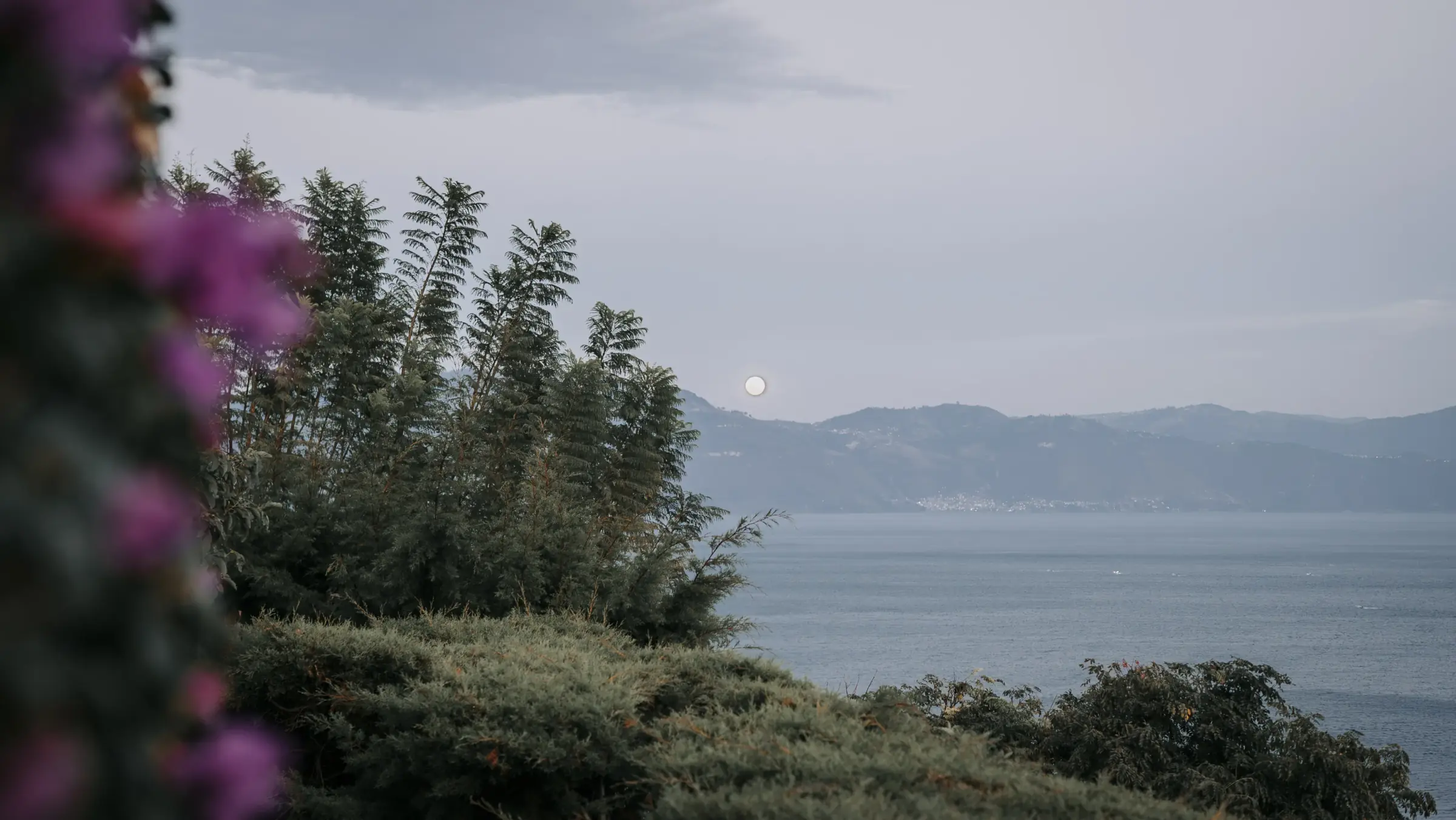
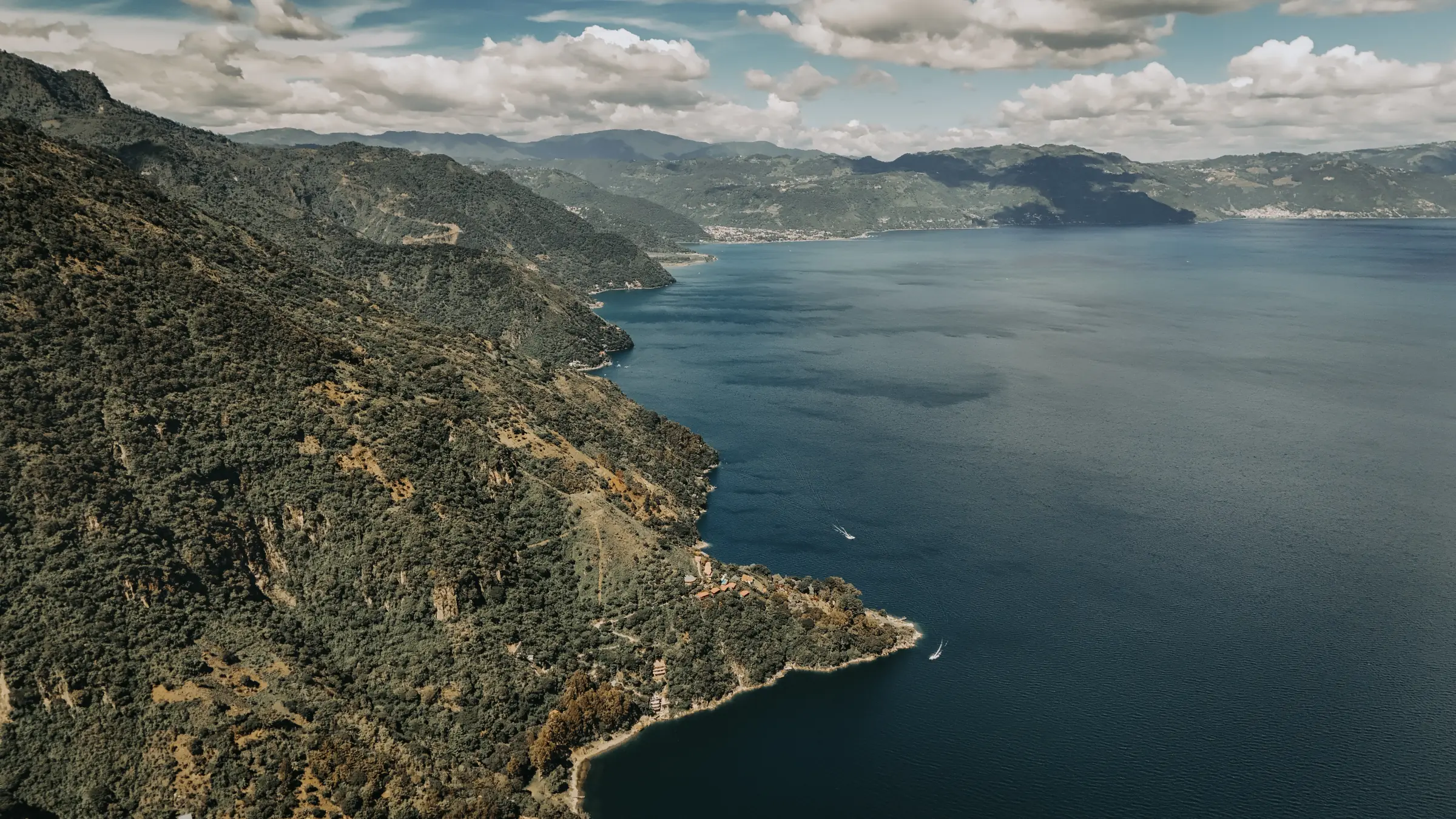
Every travel site tells you to visit Lake Atitlan from November to April. Dry skies, warm days, postcard-perfect reflections on the water. They are not wrong. But they are missing the better story. Verde Season -- May through October -- is when the caldera stops performing for tourists and starts being itself. The hills turn a green so saturated it looks retouched. The tourist boats thin out until the lake goes glass-still in the mornings. And the storms that build over three volcanoes every afternoon are among the most dramatic natural events you will ever watch from a terrace with a cup of coffee.
I have lived at Lake Atitlan through four Verde Seasons. The first time, I braced for it like everyone does. I had read the travel blogs. "Avoid rainy season." "Plan your trip for November through March." I prepared for gray skies and cabin fever. What I got was something completely different.
What Verde Season Actually Looks Like
A day at the lake, May through October
At 6 AM the caldera is silent. Mist lifts off the water in slow columns, pulling apart as the sun clears the eastern ridge. By 7 the lake is glass. The three volcanoes -- San Pedro, Toliman, Atitlan -- stand reflected so perfectly that photographs look digitally manipulated. The air is cool, clean, and carries the smell of wet volcanic soil and blooming jacaranda.
Mornings are completely clear. You can hike, swim, kayak, sit on the terrace and work, or just watch the lake do nothing for three hours. The sun is warm but not aggressive. The humidity is gentle. This is the part of Verde Season that nobody talks about because it does not fit the "rainy season" narrative.
“The mornings in Verde Season are the most beautiful mornings at the lake. The air is cleaner, the colors are more saturated, and there is nobody on the water. It feels like the lake belongs to you.”
Around 1 PM, clouds begin building over the volcanoes. You can watch it happen in real time. White cumulus stacks turn gray, then dark. By 2 or 3 PM, the storm breaks. Sometimes it is a gentle rain that taps the roof for an hour. Sometimes it is a full electrical storm -- thunder rolling across the caldera walls, lightning cracking between San Pedro and Toliman, rain coming in sheets that turn the stone paths into shallow rivers. The energy is raw and enormous. You feel the scale of the landscape in a way the sunny postcard version never communicates.
By 5 PM, the rain stops. The air temperature drops five degrees. Everything smells like wet earth and ozone. And then the sunset begins. Because of the cloud formations left over from the storm, Verde Season sunsets are more dramatic than anything the dry months produce. The light catches layers of cloud at different altitudes, turning the sky over the volcanoes into something that changes color every thirty seconds for an hour.
What Actually Changes in Verde Season
And what stays exactly the same
What Changes
The hillsides go from golden brown to electric green. The contrast is dramatic and visible within weeks of the first rains.
Afternoon storms arrive most days between 2 and 4 PM. They typically last 1 to 3 hours.
Tourist volume drops significantly. Villages that feel crowded in January feel intimate in June.
The lake surface is calmer in the mornings. The Xocomil wind that chops the water in dry season is less frequent.
Night skies include lightning shows across the caldera. Watching storms move between volcanoes from a terrace is its own form of entertainment.
Vegetation blooms. Flowers, fruit trees, and the volcanic hillside gardens reach peak expression.
What Stays the Same
Morning weather is clear and sunny, typically from 6 AM through early afternoon.
Water temperature is comfortable year round. The lake sits at 1,560 meters and stays between 68 and 72 degrees Fahrenheit.
Boat service (lanchas) runs on normal schedules. Last boats are usually around 5 to 6 PM.
All restaurants, shops, and services in the main villages remain open.
Average daily temperature stays between 55 and 75 degrees Fahrenheit. It does not get cold.
WiFi, power, and infrastructure function normally. Rain does not disrupt services.
Who Verde Season Is For
The travelers who come back during the rains
There is a specific type of traveler who prefers Verde Season, and they tend to be people who have already visited the lake during dry months. They come back for the quiet. The lack of crowd energy. The feeling of a place that is not performing for anyone. They are writers, meditators, retreat facilitators running contemplative programs, digital nomads who want to work in the mornings and watch storms in the afternoons, and Central American travelers from Guatemala City, Mexico, and Costa Rica who already know that afternoon rain is just what the tropics do.
If you need every day to look the same and every hour to be sunny, Verde Season is not for you. If you are drawn to atmosphere, depth, natural drama, and the version of a place that the guidebooks do not photograph -- Verde Season is the real Lake Atitlan.
Why Retreat Facilitators Choose Verde Season
The contemplative energy is the point
The retreat modalities that thrive in Verde Season are the ones that benefit from introspection, containment, and sensory richness. Writing retreats find the rain productive rather than disruptive -- the sound of water on volcanic stone, the moody light shifts throughout the day, and the absence of tourist noise create an environment that actively supports creative focus. Meditation and breathwork retreats gain an acoustic depth that dry season cannot replicate. Sound healing practitioners describe Verde Season storms as a natural extension of their instruments.
The practical advantages matter too. Venue rates are lower. Facilitators can offer their participants a premium experience at a more accessible price point. Group sizes are naturally more intimate because fewer people are traveling, which often leads to deeper connection and more meaningful outcomes. And the property itself feels different when it is not surrounded by the energy of peak tourism. There is a stillness that supports the kind of work these programs are designed to do.
Verde Season at Loma
What we offer from May through October
Loma sits at 5,400 feet on a volcanic cliffside above the lake. The property was built into the hillside, not onto it. During Verde Season, the hillside comes alive. The stone paths darken with rain. The air plants that cover the property -- tillandsia, living indicators of air quality -- reach their fullest expression. The 350 steps from the restaurant to the waterfront become a walk through layers of green that change shade with every altitude shift.
We offer Verde Season rates for both individual stays and retreat buyouts. Individual guests receive a complimentary healing session (massage or temazcal) for stays of five nights or longer. Retreat facilitators can book the full 14-room property at partnership pricing with co-branded landing pages, transport coordination, and marketing support.
Three meals daily, morning movement classes, the Mayan sauna, and the daily rhythm of the Eight Pillars run year round. Verde Season does not change what Loma is. It changes how the land around it looks and feels. And in our experience, it changes it for the better.
Clear mornings. Dramatic storms. Partnership pricing. The contemplative season at Lake Atitlan.